The Secret Map is written and photographed by Simon Slater. The photo essays on this site have been inspired by but not limited to traveling and living in Far and South East Asia.
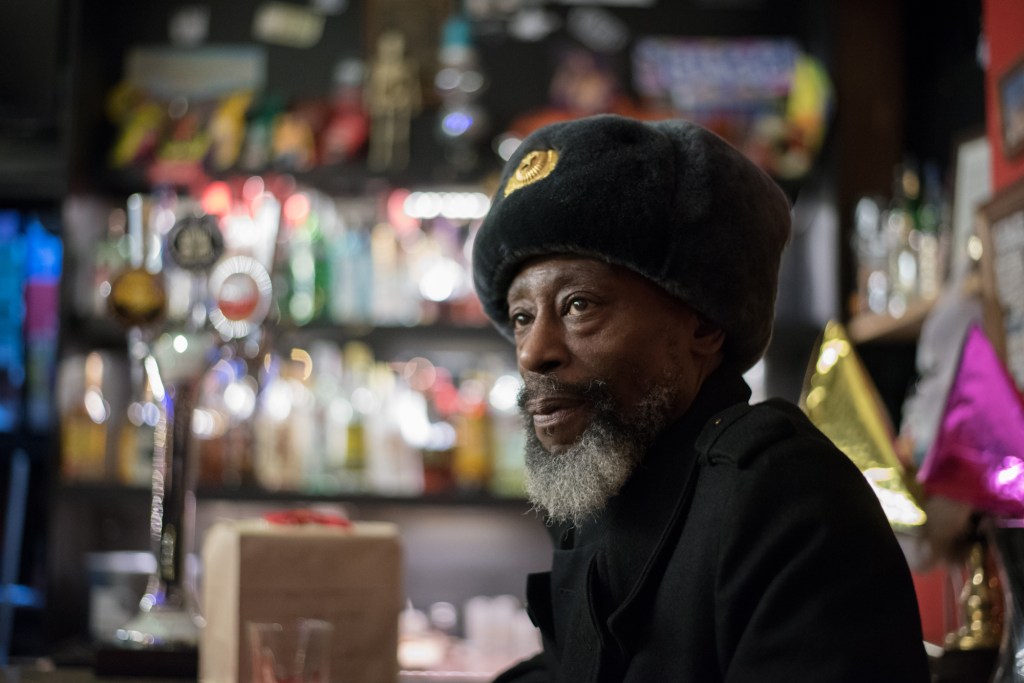
The evening I received my new full frame camera, the Nikon D750, I took it out for a walk. I made a brief stop at the pub next to my apartment, The Surrey Vaults, because they had displayed a photograph I had taken of a regular behind the bar.
Another frequenter, a Jamaican-British man named Trevor, asked me to take his portraits there and then, which I was more than happy to do. He said that he wanted a shot of him with St Paul’s church in the background, since it was a symbol of his neighborhood.
When my Italian friend Debora returned to Bristol for a few days, she suggested a day trip to a historic pier on the outskirts of Bristol. I didn’t need much convincing to escape the construction drills and sirens of the city centre but was pleasantly surprised how close an oceanic escape was – just a mere 40 minutes by local bus.
Considering that the pier is the town’s only attraction, the icy cold wind that day meant that we were almost the only out-of-towners to pay the three pound entry fee onto the old-world piece of architecture, constructed in 1869.
I’d never even heard of the town of Celevedon, let alone the pier, which Debora was aware of as it had been the shooting location of a famous British boy band. This wasn’t a photoshoot, with a lens in hand and a beautiful Italian girl in view, there was only…one direction…where said lens was going to point.
Speaking of the camera, this was to be the final outing for my Olympus OMD EM1 before I sold it to fund a new venture into the world of full frame photography. The majority of the images on this site were made using the Olympus OMD EM5, a micro four thirds mirrorless camera which gave a performance far beyond it’s toy camera appearance.
The warm weather is falling with the leaves here in England, but that’s no reason to stay indoors, especially in a city like Bristol. It was a pleasure to show 22-year old Italian Deborah Di Bartolo around for the painted city’s outdoor galleries on a typically overcast day that cleared up once we approached Cabot Tower, a century old piece of architecture looking out onto the kaleidoscope of foliage and the city beyond.
For the past year I’ve been mostly based in the south coast town of Weymouth, England, in an area known as ‘The Jurassic Coast’ for it’s ubiquitous prehistoric fossils.
Ever since King George 3rd’s sixteen consecutive summer beach vacations made Weymouth a popular British getaway, Weymouth and it’s UNESCO World Heritage coastline is a constant source of attention from outsiders.
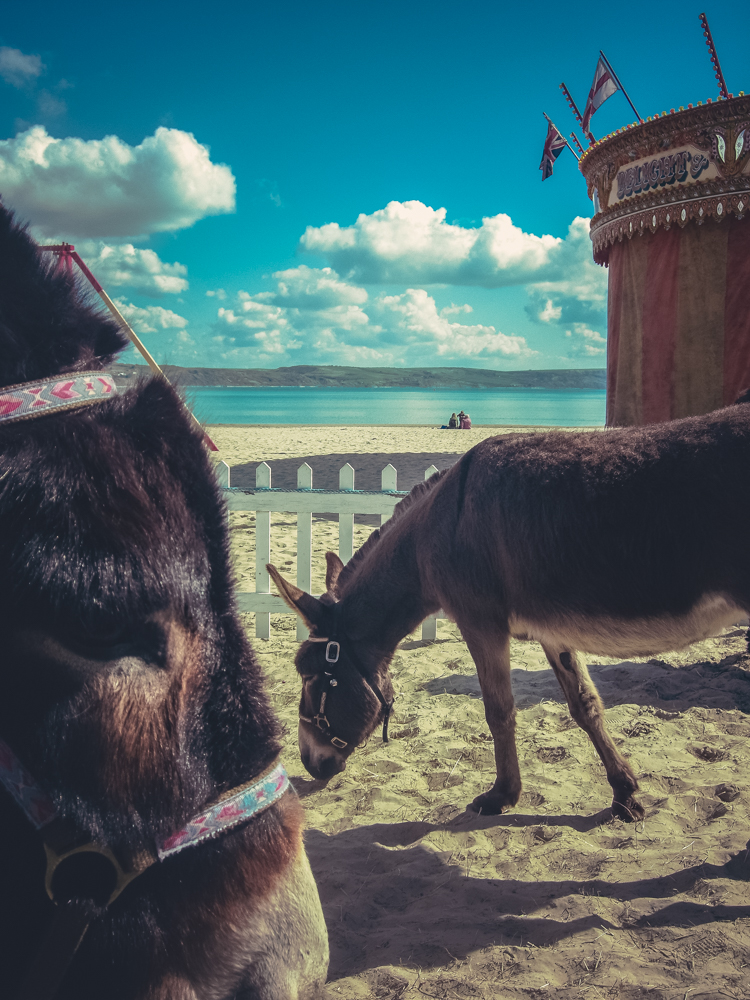
With its thatched roofs, cream teas, salty sea dogs, buckets and spades, donkeys, ciders and ales, folk music, fish n’ chips, crumbling cliff tops, green-carpeted patchwork fields, old-school children’s rides, mobility scooters, obese tourists, salted caramel ice creams, yachties, Brexiteers, amusement arcades, limestone houses, sweeping views, bad tattoos, elderly coach tours, hello moi luvvur, badgers, Punch and Judy, deckchairs and healthy doses of sea air, there’s an endearing throwback appeal to this part of Little Britain.
Many cultures tend to sweep the unavoidable reality of life’s impermanence under the societal rug. In the central highlands of Indonesia, the Torajans (‘People of the Mountains’), place this tricky topic at the forefront.
Limestone cliff faces present death literally looming over us in the form of hanging coffins and wooden effigies of the deceased. Every year sees the Cleaning of the Corpses Festival, where the remains of dead bodies are dug up, cleaned, dressed up and paraded around town. There are ‘baby trees’, where infants who have passed away prior to teething are placed inside organic tombs to absorb their spirits.
But the biggest spectacles in Tana Toraja are the grand funerals comprised of towering, boat-shaped, interlinking structures which are temporarily erected to host these multi-day ceremonies. The deceased may have been technically classified as such for many years, yet they’re embalmed and kept in the bedroom of their family house as if they are still alive until enough money has been gathered.
Buffalos, pigs, even dogs can be bought to these events. Traditionally, the spirits of the sacrificial animals are believed to usher the deceased human spirit a safe passage toward the afterlife. The wholesale slaughter is also considered a display of social weight and extravagance.
Status anxiety never did have moral underpinnings, yet the saving grace of all this bloodshed is that the meat is served to attendees, nothing goes to waste. Even the horns of the buffalo eventually adorn Torajans’ houses.
The ritualistic bloodshed mixed with the stunning tropical vistas make exploring Tana Toraja like the Asian travel equivalent of venturing to Colonel Kurtz’s outpost in Apocalpse Now. It must have been quite the experience for Christian missionaries when they first arrived in the early 1900s.
It’s still a eye-opener for the most jaded of modern day explorers.
Some video footage I stitched together:
For regular updates from The Secret Map, check the Facebook page and Instagram.
In the Spring of 2013 I took a two week trip through Burma (Myanmar). After half a century of strict military rule, a new president and a fresh democratic political climate had made it a safe and exciting new destination on the Asian travel circuit.
Things are far from perfect in these early days of democracy. The Rohingya, a Muslim population of one million people not recognised by the state among Burma’s 135 ethnic groups, are known as the most persecuted people in the world. You only have to run their name through a search engine to see that there are human tragedies happening beyond our typically one-sided media bubbles that may be far more urgent and horrifying than what has been currently being selected for us to outrage against on any given day.
Despite this, Burma is a country finally on the rise. The people here are highly welcoming to strangers and endearingly open in their engagements with foreigners. This is made even more significant since a few years prior these same people would have been highly wary of talking to outsiders for fear of falling under the Orwellian gaze of their former totalitarian regime.
Stumbling upon a news article the day before I arrived in Chiang Rai, I learned about The Golden Horse Temple, set on a steep limestone mountain near the Golden Triangle – the former heroin capital of the world on the borders of Burma and Laos.
The legend goes that the formerly abandoned and supposedly haunted temple was given new life after a champion Thai kickboxer had decided to retreat to a cave for seven days before becoming a monk and began to revive the monastery. His sermons were so inspiring that he was given a horse to travel to the nearby villages, where he eventually started to take orphans of the victims of the violent opium trade under his tutorage. He takes in impoverished hilltribe children to this day, children of families not recognised as citizens of Thailand, and teaches them to read and write, study Buddhist scripture, trains them in Muay Thai kickboxing and guides them in horseback riding as a way of collecting alms in the morning.
Known as ‘The Tiger Monk’ by locals, this warrior has survived shootings, bomb attacks and poisoning attempts by the drug cartels during his time at the temple. Although the heroin trade is now strongest in Afganistan, and most of the poppy plantations have moved into Burma’s Shan state, drug trafficking still goes on here.
The heavily tattooed Tiger Monk is now a revered figure among some Thais, but still keeps a low profile. In fact, when I asked about the location of the temple at a tourist info desk in Chiang Rai, they’d never heard of it, but I was able to find someone who I hired to take me there by car.
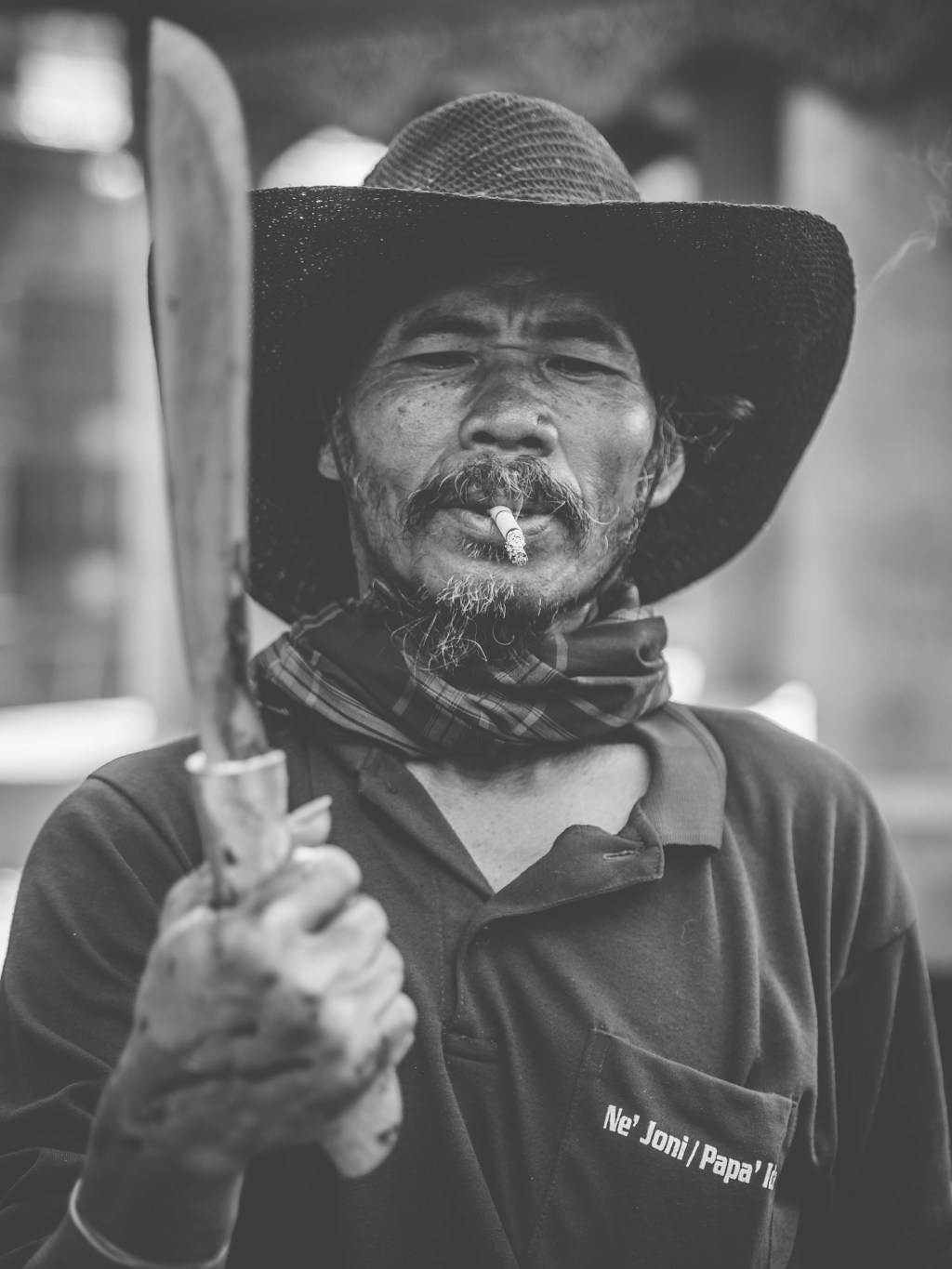
Beyond the temple of the Golden Horse, I hired scooters and bicycles from guesthouses to explore the villages, towns and cities of Chiang Rai, Chiang Mai, Nan and Phrae provinces to get a feel for the lesser-known, more rural side to Thailand, where the typical house is made of teak wood and buffalo still take precedence over tractors.
Having paid a flying visit to Thailand’s second city previously, on my second visit to southeast Asia I planned to combine a dental procedure with an extended stay in Chiang Mai, where there are jaw-dropping temples and mouth-watering dishes around every corner, not to mention monks galore.
I happened to arrive at the beginning of a week-long annual celebration for the founding of the city known as the Inthakin Pillar Festival, centred around the ancient ruins of the pillar inside Wat Chedi Luang, Chiang Mai’s central temple complex. This brought a constant daily stream of flower-bearing Buddhist devotees from in and around the city who burned incense, prayed, and feasted on the plethora of street food amongst a backdrop of traditional Lanna music and dance performances. Lanna being the ethnic culture of Northern Thailand.
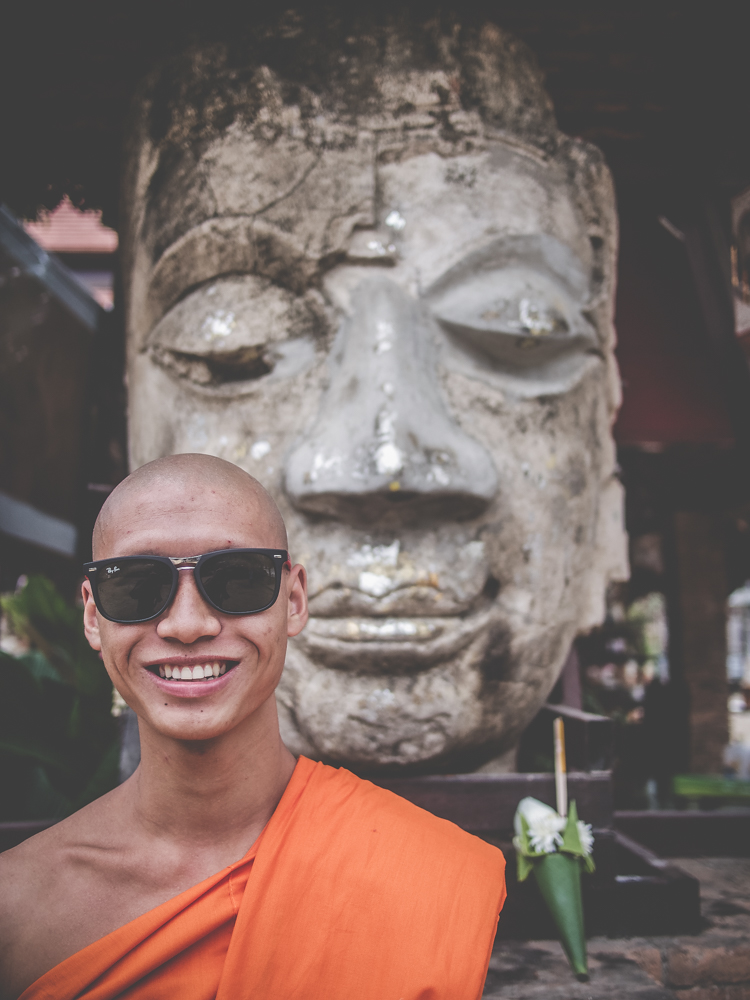
The highlight this stay was being invited to watch an ordination ceremony of three novice monks into fully-feldged monkhood. The 20-year old that invited me was the subject of the sunglasses portrait in this post, his smile masking pre-ceremony jitters. The ceremony itself is captured further down and I’m happy to say that all three of them became successfully emerged monks soon after.
The lowlight, of course, was the dentistry. Oldboy was not supposed to be an instruction manual.
I’m back again two years later, this time to take the CELTA teacher training course. It seemed like a good excuse return.
Keep up to date with The Secret Map over on the Facebook Page.
Beyond the tourist crowds, the Hindu island of Bali remains a spectacular highlight of Southeast Asia. The fusion of intoxicating spirituality and invigorating natural beauty make it a destination that will leave it hooks in you long after you’ve left it’s shores. The Island of the Gods is truly magical.
As much of America surfaces in a ball park, on a golf links, at a race track, or around a poker table, much of Bali surfaces in a cock ring. For it is only apparently cocks that are fighting there. Actually, it is men.
Clifford Geertz, The Interpretation of Cultures
Ubud, Bali. The towering shops and bar crawls of Australia-dominated Kuta is replaced by yoga workshops, upmarket clothes shops, reiki chakra massages and vegan cafes in of the Eat, Pray, Love crowd. The town serves as a hub for western health and ethical lifestyles and a living museum to primitive culture, or at least what tourists believe to be indigenous.
The Kecak, or monkey dance, as it’s sometimes called, is performed in Hindu temples to a regular audience of camera-wiedling holiday-makers. As you may have seen in Ron Fricke’s film Baraka, the Kecak features a large group of topless Balinese males, sat layered in a semi circle, chant to a polyrythmic chrous of “cak cak cak” in hypnotic fashion. This wall of sound forms the ambiance to which the Hindu play, based on India’s Ramayana, is performed. As the play progresses, the chanting men gradually transform into monkeys.
It’s easy for us to believe we’re experiencing a portal to a deep-rooted culture from a forgotten time – it was actually invented by a foreign resident, named Walter Spies, a German artist in the 1930s who blended the pre-existing exorcist chants of the sacred Sangyang dance with imagery from Indian poem.
He then sold and packaged the show to Western tourists to be displayed in Bali’s temples and beaches, as we witness an impressively staged representation of seemingly authentic Balinese culture. Heritage tourism has become big business for brand Bali, and a massive draw for seekers of the exotic.
By combining the two separate sources, Spie’s hybrid creation was a cultural exaggeration of the primitive to generate touristic voyeurism and excitement. It’s the perfect spectacle – a visually dazzling, aurally captivating adrenaline rush with a feeling of being whisked into the past for a short time.
This isn’t the locals’ choice for a hit of spiritual engagement.
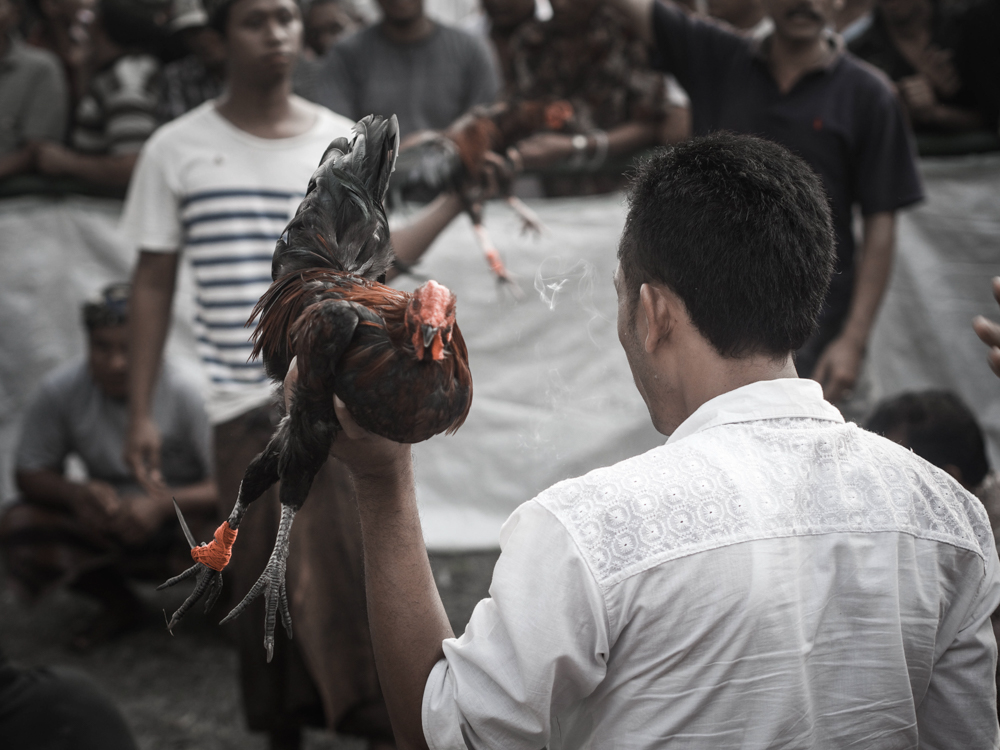
Cockfighting. These colonially-constructed cultural showcases stand in place of what used to be a less ornate, but more localized form of entertainment. Prior to the Dutch invasion in 1908, cockfighting rings used to be at the heart of every Balinese village. In fact, taxation of this bloodsport was a primary source of public revenue. They were, and still are, held on temple grounds, sometimes using the events as a blood offering to appease their gods and warn off illness, crop failure and volcanic eruptions. For this reason, on the day before Bali’s harvest season commences there simultaneous cockfights in every village on the island.
It’s technically illegal, therefore it’s an act of underground rebellion. You do not talk about Ubud Fight Club.
These men’s gatherings in semi secrecy represent an escape from Bali’s consumer culture, where mens’ warrior identities have become packaged and commodified. Here a more primal ancestral relationship to masculinity is carried out. These are arenas where Balinese men can reclaim their sense of identity, removing the colonially-constructed ideals invented for them by outsiders.
They establish this with their cocks. It’s true that a thousand puns can be made with this phallic term, but it’s also a similar sounding word in Balinese, so the joke is not lost in translation. The owners spend much time grooming their cocks, taking good care of them and show them off to a baying audience. The metaphor impossible to ignore.
Animals have low status in Bali, but in Bali’s fight clubs, men are forced to identify with their animal alter egos, as a chorus of chanting by the betting masses, circled around the main area of play bares more than a passing resemblance to the more commercialised routine of the Kecak. It’s not hard to imagine that Spies took inspiration from the energy and raw experience in these events and repackaged them for the more art-minded consumer.
Like the Kecak, It’s a focused gathering, a set of energetic local tribes engaged in continuous flow. It’s traditional. It’s very ‘cultural’. Yet if many of the health and well-being crowd from Ubud’s spa-sect stumbled upon this truly authentic experience they may be put off a return visit to the island. Maybe they’d find it tasteless, unacceptable to their Western modern standards. It would get the animal cruelty stamp. It certainly wouldn’t garner a sponsorship from one of the numerous nearby vegan restaurants.
Comparisons can be made to Chuck Palahniuk’s novel Fight Club, secret societies where geographically-diffused men flock wishing to revive a part of themselves. Fight Club saw a feminised generation of men raised by women seeking a more primal outlet to their packaged consumer lifestyle. A rejection of consumerism ,or in Bali, commercialized representations of their ancestral lifestyles, is enacted by fighting, cutting through the post-colonial counterfeits to the immediacy of living.
How much can you know about yourself if you’ve never been in a fight?
Since cockfighting has been around before the Dutch invasion, post-colonial comparisons and reasoning can appear somewhat academic. Yet it’s precisely because neocolonial Bali is firmly in place that the threads of true tradition have been led underground.
Another film that can encompasses these ideas would be 1994’s Once Were Warriors, which centres around sections of New Zealand’s Maori population that gather in pubs attempting to reclaim a displaced sense of masculinity by fighting in their ‘tribes’. This is carried out in the underbelly of a country that’s been gradually commercializing elements of indigenous culture for tourism and international representation at sports events and dance tours.
The tribal element is present at the rings here. Friends back other friends’ cocks, villagers bet on their own against outsiders and excitement is raised, along with the amount of bets, when men of high status enter the ring. This is more than quick Sunday escape – it’s a national sport, a way of life.
Some folk literally ‘bet the farm’ on the outcome of a single fight, which usually only last for a minute. It’s a far cry from Ubud’s Colonic Hydrotherapy Centre, but as Tyler Durden says in Fight Club: “Self-improvement is masturbation, maybe self-destruction is the answer”. Marla Singer, the book’s femme fetale says of her own voyeuristic cancer group visits: “Funerals are nothing compared to this. Funerals are all abstract ceremony. Here, you have the real experience of death.” There’s no abstraction at Bali’s fight clubs. No leaflet handed out at the door. What you encounter is visceral, violent and unsympathetic to any Western standards of political correctness.
The day I took these photographs, I had a vegan burger in Ubud for breakfast, went for a bike ride along the rice paddies and stumbled across the cockfighting by chance ten minutes out of town. I headed back for a massage and finished the evening with a viewing of the Kecak, which I’d been excited to see since my first viewing of Baraka.
Both the Kecak and the cockfighting events are a stimulating cultural experience. Even if the the Bali that most visitors see itself isn’t wholly authentic, does it really matter? After all, ignorance, especially for the ethical tourist coming to eat, pray and love themselves for a week, is bliss.
Is it to escape our daily routine? Perhaps it’s to see the world and how others live. Some of us travel for an extended holiday while others wish to challenge themselves by living economically along the road less traveled.
On a recent trip to Cambodia, I desired to do all of the above. I left with lighter pockets but felt richer in spirit.
Here are ten things I learned in the Cambodian school of life.
1. BE YOUR OWN GUIDE
However much pre-trip planning you’ve done, you’ll meet plenty of people along the way to help guide you. The best outcomes are usually the result of gut instinct.
Too many of travelers rush from A to B without stopping to smell the lotus flowers. Loosen your schedule and slow down. Things may not go to plan so learn from your mistakes or misfortunes – they will make you stronger and wiser.
In Battambang, my friend Chris and I were going to visit a killing field area when teh steep ticket price, coupled with amount of tourists heading there made us do a 180 degree turn and we found ourselves a few minutes later in a monk’s garden who had a playful pet monkey. No ticket required.
Don’t let a rainstorm get you down – savour it.Don’t forget to appreciate the now…or it’ll pass you by.Tourists gone one way? Go the other! The road less traveled always offers more interesting sights.
2. SHARE YOUR PASSION – At a guesthouse I met a young man named Jacob. Instead of the typical “What do you do?”, he asked “What’s your passion?”. I told him photography, he was into drawing and painting. When the guesthouse owners discovered our passions, Jacob was commissioned to design his first mural for them, while I was tasked to document the process.
Over the course of five weeks, I saw an incredible amount of creative talent emerge from people both individually and collaboratively. Showing your talent not only displays it to the world, but the sharing of it openly encourages you to up your game.
The merging of different crafts as people create together breeds new forms of expression This can create a ripple effect, inspiring others and even forming communities. Otres Beach on the south coast of Cambodia was one such community of artistically minded foreigners forging an alternative society for themselves outside of the ones made for them by society. “It’s like ‘The Beach’, said an Otres veteran, referring to Alex Garland’s novel.
Jacob drawing the blueprint for what would be his first mural.He reproduced his vision with startling accuracy.Because Jacob had contributed his time and talents he was given ‘artist in residence’ status and was fed and housed in return for his work.
3. GIVE BACK
Too many human interactions are fleeting and momentary. Whether it’s life or travel, we should always consider whether we are taking more than we’re giving.
My prime reason for going to Cambodia this time was to deliver a magazine to a girl I’d photographed two years prior. Her image featured in a travel article I wrote about Kampot.
Although I’d returned the same photograph as a print the first time around, she wasn’t that impressed (it was the colour isolation, I know it!), but when I returned with the magazine, her jaw hit the floor. Her friends and family were also excited but I think I may have been the happiest because of the sense of completion it gave me and how positive the reaction was. It also provided a portal into a community I wouldn’t have a reason to visit otherwise.
Of course, in Cambodia there many ways you can give your time, such as help to build a school, teach, volunteer for various cleanup projects, the list is endless. Returning a printed photograph is just the tip of the iceberg.
Doray, the girl from the photograph, became the village celebrity for the dayIt was as much of a pleasure to give this photo to Mai, an elder in Doray’s village, as it seemed to have received it. We didn’t need to speak each other’s language to create this momentary bond. The lifestyle of a monk is relatively simple, and it’s a very simple gesture to bring back a printed photograph.
4. JUDGE NOT
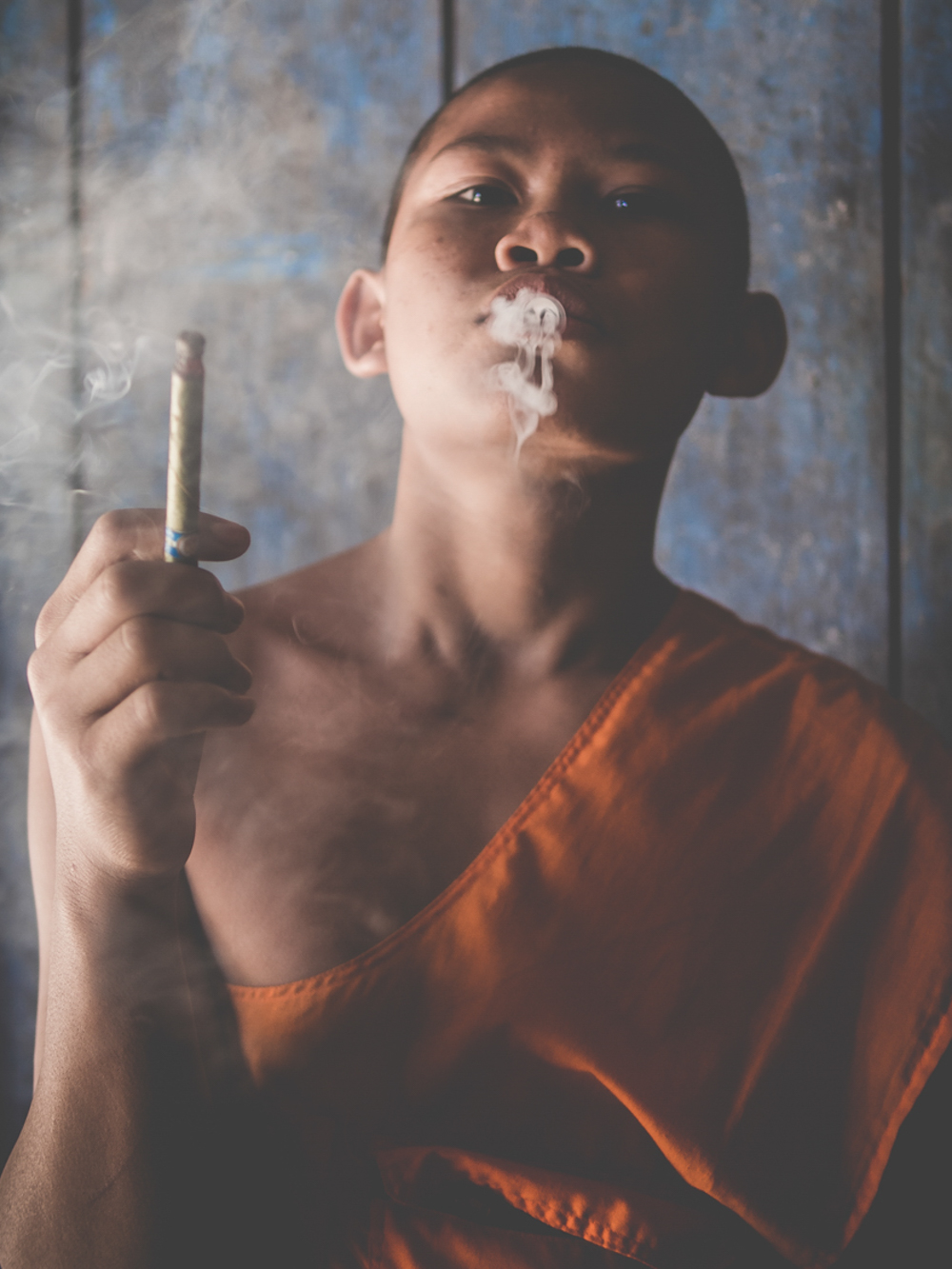
Some of you may have seen monks subverting the stereotype of purity and innocence in South East Asia. Whether it’s smoking or playing rap music from smartphones, some tourists are surprised to see behaviour that taints their idealized image of monkhood, while others decry it morally wrong.
Donning an orange robe doesn’t take away what’s underneath. Many of the young monks talk about girls, listen to rap, play fight and generally act their age. Boys will be boys, and the more you get to know them on an individual level, the less idealized your vision becomes.
Some people are kinder than others, some more innocent, others more corrupt. This applies whether you have an orange robe or a suit and tie, no matter how we present ourselves in public or on our social media profiles. We all have vices, so never be quick to judge someone else’s character without first being honest about your own.
FLOW
Achieving a state of flow means clearing your mind of thoughts of past or future and focusing on the here and now. The gentle nature of Cambodians, the staggered beauty of their ravaged tropical landscape and the slower pace of life compared it’s more aggressively modernizing neighbour, Thailand, means that crossing into Cambodia is like entering a new realm of existence.
Spending time in Cambodia, where your everyday conveniences are stripped back and you aren’t so comfortable, shakes up your senses and makes you more alert. The developed world has people wrapped up in emotional cotton wool – we’ve become victims of comfort.
As Brad Pitt’s character Tyler Durden says in the film Fight Club: “The things you own end up owning you”. You won’t realize the truth of this statement until you relinquish, however briefly, the myriad of material accumulations you surrounded yourself with back home. The disregard of so many material possessions allows us to relax, be happier and embrace a more present state of mind. If there are still things that you miss after time away from them, you will value them even more in their absence.
6. MAKE CONNECTIONS
If you’ve traveled to uncover more about a culture, a great way to satiate your curiosity is to directly approach people.
In Cambodia, I’ve seen countless tourists walking sheepishly around temples, Lonely Planet in hand, curiously staring at monks but often too shy to talk to them. The monks I’ve told about this have revealed that they too are shy because of their own relative social isolation, and more often than not, they’re unnecessarily worried about their English ability. Cambodian Monks tend to study foreign languages so there’s a good chance you’ll be able to strike up a conversation. In one temple I visited they even studied Korean.
We are each other’s curiosity, and once you approach someone and start asking questions, you will find they may be equally curious about your own life and culture.
Curious cats on the streets of Phnom Penh.At a temple in Kampong Cham, I was observing a monk in his room only to discover he was looking for some drinks to give to my friends and I.We conversed a little and later became friends of Facebook – most monks these days have a Facebook profile.
7. IMMERSE YOURSELF
One way to immerse yourself in the culture of a country is to learn about some of it’s history. In a place Cambodia, I would consider it essential, considering how impactful the Khmer Rouge-led genocide was.
The main victimsof the killing were the intelligentsia, thus when the Khmer Rouge was removed from power, Cambodia was not only financially poor, but intellectually – a burden the country is still suffering heavily from to this day. Contextual knowledge of your surroundings will allow yourself to see things with more understanding.
Gaining a new perspective from afar can allow you re-assess your own priorities and emotional attachments. Likewise, returning to a familiar place can give us ‘reverse culture shock’, a feeling that once-familiar surroundings can no longer be seen in the same light as before. Previous paradigms of reality can shift dramatically when relative to aspects of life you’ve witnessed in different cultures.
A visit to Tuol Sleng Genocide Museum in Cambodia’s capital city of Phnom Penh forms an understanding of how things came to be.‘The Killing Fields’ were the terms for many sites around the country during the rule of the Khmer Rouge, where over a million people were taken and killed in a manner rarely subjected to animals. Learning about symbolic meanings behind images seen in Angkorian temples brings a new experience to the viewing of architecture. The character above is known as a ‘Devata’, a seductive female deity stemming from the Hindu religion. This sensual historical awareness can breathe new life into dusty temples.
8. EMBRACE CHANGE
The place you once visited will not be the same place you return to. Everything changes. Nothing in the material world ever stays the same. To quote Chuck Palahniuk’s Fight Club character again: “Nothing is static. Everything is evolving. Everything is falling apart.”
Five years ago at Otres Beach, on Cambodia’s south coast, there was almost no development. Now it is a large community with long-term foreign residents mixed with short-term backpackers and flashpackers. It’s still retains a secluded charm, yet utopia’s inevitability of dystopia means that the population and prices in Otres will keep rising and the quaint little foreign enclave will transformed to something more soulless. But that’s OK – because there’s always a new version of ‘The Beach’ when the old one gets overrun. (2020 edit: dystopia is now in full effect)
Yet it’s not just the tourist enclaves, change is dramatically evident in Cambodia’s capital city of Phnom Penn, where the sizable ship of capitalism has dropped it’s heavy anchor. The city center’s shanty neighbourhoods have mostly been cleared for the development luxury malls, hotels and a new two million dollar mosque. Phnom Penh provides a fascinating contrast of this divide between rich and poor.
Instead of bemoaning and fighting the inevitable, we must accept that we have to make the most of what is in front of us in the present, because it might not be around in the future.
A view from $2,000,000 mosque in the city center. One shanty dwelling remains from a vast area cleared by forced evictions.Cyclo drivers are a remnant of the old way of life in Phnom Penh, and are among the city’s poorest residents, often seen sleeping in their modes of transport.There is a world of distance between the modern and tradition lifestyles in Phnom Penh.
9. RETURN TO NATURE
Walk barefoot in sand and listen to the music of the ocean. Explore forests. Soak in sunlight and observe a slow sunset, escaping the grey urban matrix we’ve constructed for ourselves.
After taking daily two hour walks along the beach in Otres, I was physically healthier and felt much of the stress formed from my previous city-dwelling lifestyle dissipate over time as I attuned to nature’s natural rhythms. Don’t just take my word for it, this observation is backed up by psychological research.
Spend time in more organic realms, this is where we belong. Relax, detach and still your restless mind. It will do you a world of good.
On my travels, I was asked to take shots for a few yogi’s portfolios. Yoga itself is a spiritually cleansing pursuit, but performed to the sound of gentle waves crashing, engulfed in the warm evening heat, and with feet rooted in a natural yoga mat of sand, can enhance the experience immensely.There are numerous benefits to walking barefoot including improved balance and posture, increased energy, better blood circulation to name but a few.The glorious sunsets of Cambodia aren’t just a pretty picture. Taking the time to appreciate nature’s greatest of spectacles attunes us to the present moment and away from thoughts of past and future. This freeing of stress and anxiety clears your mind for inspiration and relaxed introspection.
10. UNDERSTAND LIFE IS DEFINED BY OPPOSITES
In developing nations such as Cambodia you are witness to stark contradictions. The sense of freedom you feel in a country with loose laws can also be the reason for it’s dangers. Foreign communities are appealing alternative societies, but in contrast to the surrounding local culture, they can can be seen as neo-colonialism. You can see this emerging on the beaches of the south coast (2020 update: especially now), but in Siem Reap, where the tourist dollar is king, the amount of foreigners have turned the place into Disneyland.
Despite a lack of decent infrastructure, the relatively simple lifestyle Cambodians have lived by is one of less worry and anxiety than the hyperactive status-driven countries of the West. People always comment how people in developing nations seem happier, despite having ;ess material wealth. The late rapper The Notorious B.I.G. talked about the accumulation of wealth breeding “Jealousy, envy and negative energy”. Philosopher Alain De Botton calls this Status Anxiety.
Traveling and living with less creature comforts for a while can put things in perspective about what are the true things in life that create joy. Negatively comparing yourself to your neighbour or your friends’ highlighted and carefully-presented social media lives will merely lead to feelings of inadequacy. Go hang out in the Cambodian countryside for a while instead.
The weight from the past is heavy, but with the right spirit, the young population can it pull over their shoulders and march forward.Education maybe lacking at the moment, but young Cambodians are well trained in the school of life.The future can be bright in Cambodia, but there’s a long road ahead. These photographs were taken not far from Otres on Cambodia’s south coast.
Of course, there are many more lessons to learn. Visiting a country can provide much more than embracing an unfamiliar culture and environment – it may give you refreshed perspectives about the places and people back home, too.
“I’m from Israel but my parents are from the Ukraine.”
What are you doing today?
“No plan.”
Perfect, you can be my model.
Dressed from head to toe in Korean garments, I’d met this culturally fluid 20 year old at breakfast in the modern center of an equally culturally divergent city – Hong Kong. Traveling alone, she’d an optimistic energy to her which seemed to encapsulate the spirit of the city.
If one Hongkonger ever mirrored the city’s synthesis of traditional and forward thinking ambitions it’s Bruce Lee. His philosophy of fluidity and adaptability is observed in the urban landscape here where ancient temples are seamlessly interwoven into modern neighborhoods. His unrivaled success in fusing eastern and western cultures can be seen in the city’s sophisticated melting pot of international inhabitants and lifestyles.
The main umbrellas on parade were wielded by those sheltering from sudden rain storms, yet in recent times umbrellas signified protection of a different measure. The 2014 Umbrella Movement of citizens protesting to retain their democracy culminated in violent clashes between citizens and their police force. Like Bruce lee himself, who fought an opponent arranged by the martial arts establishment to keep teaching westerners, the people here showed fierce grit and determination to live independently and not be controlled by outside forces.
To say people here are tight knit would be an understatement. In a city with over 40 billionaires, real estate is sky high and living space is extremely close quarters.
Hong Kong’s elderly are amongst the developed world’s poorest citizens, second only to South Korea. Like Seoul, the pace of life and modern developments seem to favor the youth, so adaptation is key to survival in this urban jungle.
Unique hybrids develop out of fusion along with new ways of seeing.
The wilting bodies of the elderly compared to the vibrant youth, like the constructions of Kowloon to it’s glitzy Hong Kong Island counterpart stand in direct contrast to each other yet are more complete when considered as a whole. There is beauty in transience, and Hong Kong, much like the legacy of Bruce Lee, stands as an embodiment of adaptation and forward thinking.